
Doing your first site visit
What we look for when we visit sites.
Anthony Kusky
2/12/20263 min read
Your First Self-Storage Site Visit: What to Look For Before You Fall in Love
If you’re serious about buying self-storage, your first site visit is not a casual walkthrough.
It’s reconnaissance.
Pictures online can hide problems. Broker packages highlight upside. Sellers tell stories. Your job on that first visit is simple:
Confirm the truth.
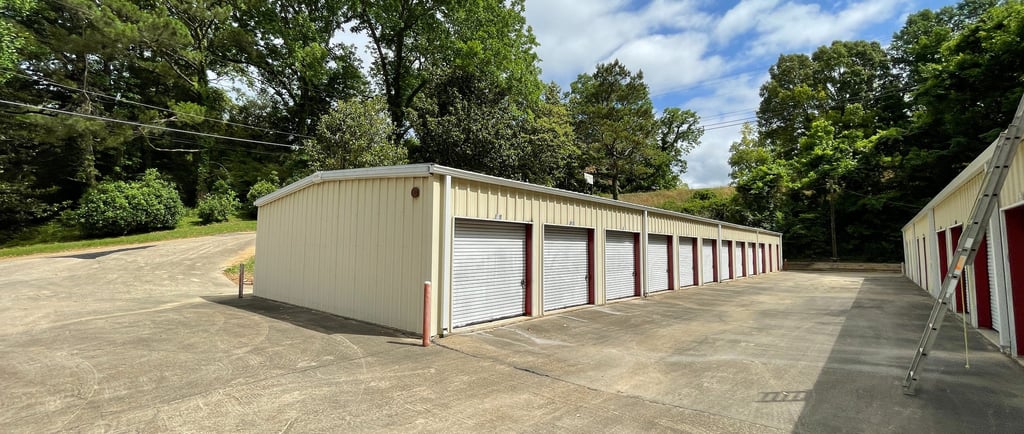
I’ve bought facilities across the Southeast and Midwest, and one of the sites I purchased had an old ladder permanently attached to the exterior wall going straight to the roof. That alone told me something: this property had been owner-managed, likely hands-on, and not updated in years. It also told me I needed to get up there and see what condition that roof was really in.
That’s what a first visit is about — reading the clues.
Here’s how to approach it the right way.
1. Start With the Drive-In (Before You Even Get Out)
Your evaluation starts when you turn off the main road.
Ask yourself:
Is it easy to find?
Is there good visibility from traffic?
Are there nearby anchors (Walmart, Dollar General, industrial parks, apartments)?
Does the entrance feel inviting or forgotten?
If it’s gravel, muddy, or overgrown, that’s not necessarily a deal killer. It may be your value-add opportunity. But you need to note it.
Don’t fix it in your head yet. Just observe.
2. Walk Every Row — Slowly
Do not rush this.
You’re looking for:
Door condition (rust, bent panels, mismatched colors)
Concrete cracking or heaving
Drainage issues
Evidence of roof sagging
Signs of water intrusion
Lighting (or lack of it)
And yes — if there’s a ladder attached to the building, use it (safely). Roof replacement can wipe out your first two years of projected cash flow if you don’t plan for it.
Look at:
Fasteners backing out
Rusted seams
Ponding areas
Patches or different colored metal panels
An older owner-managed property often means deferred maintenance. That’s not bad. That’s margin — if you price it right.
3. Check Occupancy With Your Eyes
Before you ever open a spreadsheet, look at the locks.
How many units actually have locks?
Are they tenant locks or old rusty padlocks?
Are there empty units with doors slightly open?
Is there junk stored outside units?
You’ll quickly get a feel for whether 92% physical occupancy in the OM is real or optimistic.
Trust your eyes.
4. Evaluate the Security Setup
Self-storage runs on trust.
Look for:
Fencing condition
Gate operator age
Keypad functionality
Cameras (real or fake?)
Lighting coverage at night (if possible, drive by after dark)
If security is weak, that’s an upgrade opportunity — but it’s also a CapEx line item.
5. Talk to Tenants (If You Can)
This is one of the most underrated due diligence steps.
If you see a tenant:
Ask how long they’ve been there.
Ask how they like the facility.
Ask if rent has increased recently.
You’ll learn more in five minutes of casual conversation than you will in 20 pages of financials.
6. Study the Surrounding Market
Before you leave town:
Visit competitors.
Check their rates.
Observe their condition.
See if they have signage promoting specials.
If your target property is clearly inferior but priced as “stabilized,” you have work to do in negotiations.
If it’s inferior but underpriced? That’s opportunity.
7. Take Pictures of Everything
Even the bad stuff.
Especially the bad stuff.
You’re going to forget details later. Your future underwriting depends on what you document today.
8. Separate Emotion From Numbers
This is where most new buyers make mistakes.
You’ll either:
Fall in love with “the potential”
Or panic because it looks rough
Neither reaction matters.
Your job is to gather facts so the numbers can tell you what it’s worth.
That old ladder on the building? It didn’t scare me. It told me the owner probably climbed up there himself instead of hiring contractors. That told me how the property had been operated.
Every detail tells a story.
Your job is to read it.
Final Advice
On your first site visit:
Don’t try to solve problems.
Don’t renegotiate on the spot.
Don’t assume upside.
Just observe and document.
The spreadsheet comes later.
If you approach site visits with discipline instead of emotion, you’ll avoid expensive surprises — and you’ll recognize real opportunity when you see it.
And that’s how you build a storage portfolio the right way.
Contact
Reach out anytime for questions or partnerships.
AK@SellStorage.net
407-434-1193
© 2025. All rights reserved.
“Do not be anxious about anything, but in every situation, by prayer and petition, with thanksgiving, present your requests to God.”
Philippians 4:6 NIV